


-
-
FJf – Facet Joint Fusion
Minimally invasive facet joint fusion
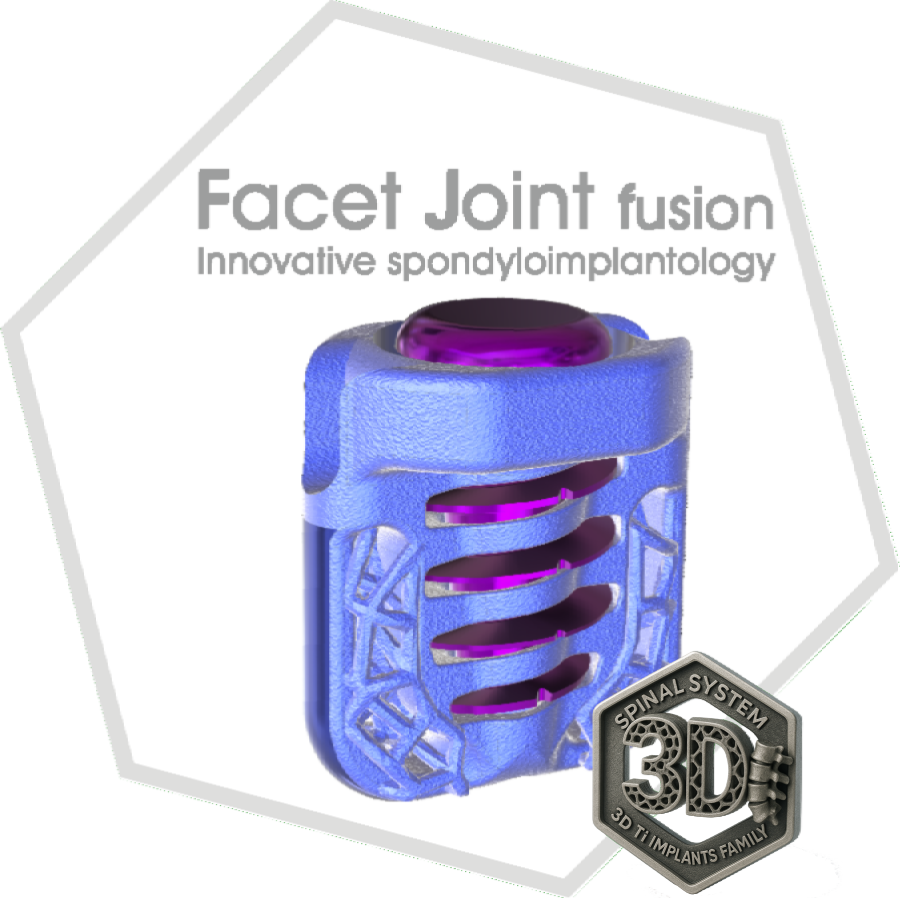
FJf (Facet Joint Fusion) is an advanced system designed for bilateral fusion stabilization of the spinal facet joints, intended for patients suffering from chronic back pain. In line with the LfC philosophy “Measuring up to nature”, the system utilizes the body’s natural bone-healing mechanisms supported by an implant structure that mimics the architecture of bone tissue. The applied 3D-TrabeQcell® microarchitecture and optimized surface roughness promote osteointegration and accelerate the fusion process during the postoperative period.
The sophisticated design of the compressive facet joint plate, manufactured using 3D printing technology, enables spontaneous filling of the porous structures with bone material during implantation. System stability is ensured by a cooperating self-centering, rotational locking screw, which simultaneously anchors in the bone during insertion, securing the implant against loosening and migration.
The FJf system has been developed as a minimally invasive solution, allowing facet joint stabilization through a MISS approach. It can be used as a stand-alone stabilizing implant or as an adjunct to interbody fusion procedures (TLIF, PLIF, ALIF), creating a 360° stabilization construct. System components are available in a dimensional range that allows precise adaptation to individual patient anatomy.
-
- bilateral facet joint fusion and stabilization
- segmental stability for chronic back pain treatment
- stand-alone or adjunct use with TLIF, PLIF, ALIF (360° stabilization)
- minimally invasive implantation (MISS)
- support of natural bone fusion
Functions
-
- porous 3D-TrabeQcell® structure for enhanced osteointegration
- optimized surface promoting faster fusion
- self-locking screw preventing loosening and migration
- minimally invasive, tissue-sparing approach
Advantages

PHONE
+48 68 321 92 00
ADDRESS
ul. Składowa 5B
PL 66-016 Czerwieńsk
E-MAIL
lfc@lfc.com.pl
- Nota prawna
© LfC All rights reserved - Strony internetowe
